Keeping food storage containers organized often feels harder than cooking itself. Many households waste valuable time searching for matching lids before storing leftovers. Research suggests that the average person spends several minutes daily looking for misplaced household items, while organized kitchens improve efficiency and reduce stress. Learning the best way to store Tupperware lids creates a cleaner cabinet, saves storage space, and makes everyday meal preparation much easier.
Why Proper Tupperware Lid Storage Matters
Messy cabinets quickly become frustrating because stacked lids slide everywhere during daily use. Instead, creating dedicated storage areas keeps everything visible and easy to reach. You can also improve your entire kitchen workflow by following these organize your kitchen strategies while arranging storage containers.
Organized lids also protect containers from unnecessary damage and reduce replacement costs over time. Furthermore, matching containers becomes much faster because every lid stays upright and accessible. This simple habit helps every kitchen feel more functional throughout the week.
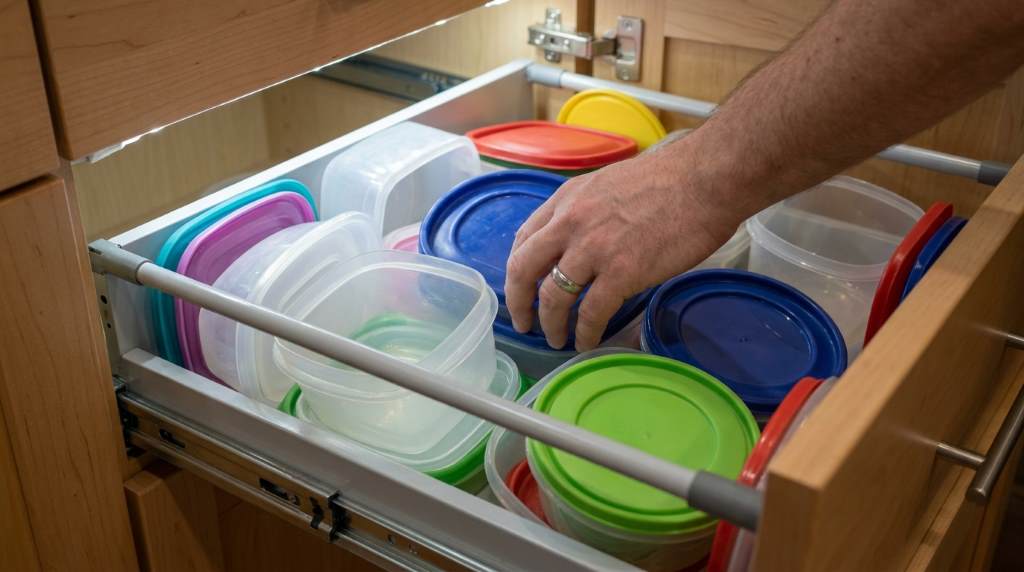
Choose One Dedicated Storage Zone
Selecting one cabinet or drawer prevents lids from spreading across different storage areas. Consequently, everyone in the household knows exactly where every lid belongs. Before organizing containers, many homeowners also benefit from learning how to set up a kitchen for smoother daily routines.
A dedicated location also reduces visual clutter throughout nearby cabinets and shelves. Moreover, cooking becomes easier because matching containers remain within immediate reach after every meal. Consistency creates lasting organization without extra daily effort.
Sort Lids by Size and Shape
Grouping similar lids together eliminates unnecessary searching before storing leftovers. Likewise, square lids should remain separate from rectangular or round designs for faster identification. While refreshing your organization routine, remember that clean storage areas stay attractive when you know remove turmeric stains from nearby kitchen surfaces.
Matching similar shapes also reduces unstable piles that frequently collapse inside crowded cabinets. As a result, your storage area stays neat with very little ongoing maintenance. Every family member can quickly locate the correct lid.
Helpful Sorting Categories
- Round lids together
- Square lids together
- Rectangle lids together
- Large serving container lids
- Small snack container lids
- Glass container lids separated from plastic lids
Store Lids Vertically Instead of Stacking
Vertical storage keeps every lid visible from the front without lifting large piles. Therefore, grabbing the correct size becomes much quicker during busy cooking sessions. Standing lids upright also prevents warped edges caused by heavy stacking.
Many professional organizers recommend vertical storage because it maximizes available cabinet height. Additionally, it creates clean rows that stay organized even after repeated daily use. This method works especially well inside deep drawers.
Simple Vertical Storage Tools
- Expandable file organizers
- Plate racks
- Wire dividers
- Cabinet organizers
- Bamboo storage racks
Use Adjustable Cabinet Dividers
Cabinet dividers create individual sections for different lid sizes without requiring expensive storage systems. Meanwhile, adjustable designs adapt easily whenever your container collection changes. Every compartment stays organized with minimal effort.
Quality dividers also prevent lids from sliding into neighboring sections after opening cabinet doors. Consequently, your organization system remains dependable throughout everyday kitchen activities. Small improvements often deliver impressive long term benefits.
Keep Matching Sets Together Whenever Possible
Some storage systems allow containers and lids to remain connected without taking excessive space. As a result, finding complete sets becomes almost effortless before packing lunches or storing leftovers. This habit also reduces missing pieces.
However, avoid sealing empty containers tightly because trapped moisture may create unpleasant odors over time. Instead, place lids loosely on containers whenever practical. Air circulation helps maintain freshness between uses.
Declutter Your Collection Regularly
Many kitchens contain cracked containers or unmatched lids that consume valuable cabinet space unnecessarily. Therefore, schedule quick organization sessions every few months to remove unusable items. Less clutter makes everyday storage noticeably easier.
Donate complete container sets that you rarely use but remain in excellent condition. Likewise, recycle damaged plastic whenever local recycling programs accept suitable materials. Organized kitchens benefit from intentional simplicity.
Items to Remove
- Warped lids
- Cracked containers
- Duplicate pieces
- Unmatched lids
- Broken locking containers
Use Drawer Organizers for Smaller Lids
Shallow kitchen drawers provide excellent storage for snack container lids and compact food containers. Furthermore, drawer organizers prevent smaller pieces from disappearing beneath larger kitchen tools. Every section stays tidy throughout busy weeks.
Clear organizers improve visibility while reducing unnecessary digging before meal preparation. Consequently, daily cleanup becomes much faster because every lid returns to its assigned location. Organized drawers also look cleaner.
Label Storage Sections Clearly
Simple labels encourage everyone in the household to return lids correctly after washing dishes. Likewise, guests can easily help with cleanup without creating additional clutter. Clear organization saves time every single day.
Reusable adhesive labels work especially well because storage needs often change over time. Therefore, updating cabinet sections remains quick whenever new containers enter your kitchen. Flexibility supports lasting organization.
Avoid Common Storage Mistakes
Stacking every lid into one unstable pile creates frustration during nearly every meal preparation session. Instead, separate categories using practical dividers or storage racks. Simple systems usually outperform complicated organization methods.
Another frequent mistake involves storing dirty or damp lids before complete drying. Moisture encourages unpleasant smells and unnecessary cleaning later. Always dry every piece thoroughly before placing it inside cabinets.
Common Mistakes
- Mixing every size together
- Overfilling storage cabinets
- Ignoring broken lids
- Stacking unstable piles
- Storing damp containers
Maintain Your Organization System
Even the best storage method requires occasional maintenance to remain effective throughout the year. Therefore, spend several minutes weekly returning misplaced lids to their proper sections. Small habits produce lasting results.
Encourage every family member to follow the same storage routine after unloading clean dishes. Consistent organization prevents clutter from returning unexpectedly. Everyone benefits from an orderly kitchen.
Conclusion
Finding the best way to store Tupperware lids does not require expensive organizers or major cabinet renovations. Instead, thoughtful sorting, vertical storage, regular decluttering, and consistent habits create a kitchen that feels cleaner and works better every day. Start with one cabinet today, apply these practical strategies, and enjoy faster meal preparation with far less frustration.
Frequently Asked Questions
What is the best way to store Tupperware lids?
Store lids vertically in organized sections grouped by similar size and shape.
Should Tupperware lids stay attached to containers?
Keep lids loosely placed instead of sealing containers tightly during storage.
How often should I organize food storage containers?
Review and declutter your collection every few months for the best results.
Are drawer organizers good for storing lids?
Yes, drawer organizers keep small lids visible, separated, and easy to access.
Why do my Tupperware lids become messy so quickly?
Mixing different sizes together without dividers usually creates clutter and unstable stacks.