A chef knife is worth buying when it has good steel, a comfortable handle, solid balance, and a blade that stays sharp. Price matters less than these four traits. A well-made knife at a fair price beats a fancy one that feels awkward in your hand.
Most home cooks use one knife for nearly every task. That makes it the most important tool in your kitchen. Choosing well saves you time, effort, and money.
In this guide, you will learn what to look for, what to skip, and how to match a knife to your cooking style. You will also see how to care for your knife so it lasts for years.
Blade Steel: The Heart of a Good Chef Knife
The best chef knife starts with quality steel. Steel decides how sharp the blade gets, how long it stays sharp, and how easily it resists rust.
Most knives fall into two groups. Each group has clear strengths.
Stainless Steel Blades
Stainless steel resists rust and stains. It is easy to care for, which makes it a smart choice for busy kitchens. Many stainless blades also hold a good edge.
However, softer stainless steel dulls faster. You will need to hone it often. Still, it forgives mistakes like leaving the knife wet for a short time.
High-Carbon Steel Blades
High-carbon steel takes a very sharp edge. It is also easier to sharpen. Many professional cooks love it for these reasons.
On the other hand, it can rust or stain if you neglect it. You must wipe it dry right after use. If you accept that habit, carbon steel can be very rewarding.
Which Steel Should You Pick?
Choose stainless if you want low maintenance. Choose high-carbon if you enjoy caring for your tools. Many brands also offer blends that balance both benefits.
Forged vs. Stamped: Does It Matter?
Forged and stamped knives can both be worth buying. The method matters less than the quality of the steel and the final finish.
A forged knife is shaped from a single piece of heated steel. It is often heavier and has a thick bolster, which is the band of metal between the blade and handle. Many cooks like this weight for chopping hard vegetables.
A stamped knife is cut from a large sheet of steel. It is usually lighter and cheaper. Some modern stamped knives perform very well, so do not dismiss them.
Instead of judging by the label, test the knife. Check how it feels when you slice, rock, and chop. A comfortable, sharp knife is a good knife, no matter how it was made.
Balance and Weight: How the Knife Feels
Balance decides how tired your hand feels after ten minutes of chopping. A balanced knife feels steady and natural, not heavy at the tip or the handle.
To test balance, rest the spot where the blade meets the handle on your finger. A well-balanced knife stays level or tips only slightly. If it dives forward or backward, it may feel awkward.
Weight is a matter of taste. Some cooks prefer a heavy knife because it cuts with less pressure. Others like a light knife because it feels quick and nimble. Try both if you can.
Handle Comfort and Grip
A good handle keeps your hand safe and relaxed. It should fit your palm without sharp edges or hot spots.
Common handle materials include:
- Wood: Warm and attractive, but it needs more care.
- Plastic or composite: Durable, easy to clean, and often affordable.
- Metal: Strong and sleek, but it can feel slippery when wet.
Also, think about your hand size. Small hands may prefer a slimmer handle. Large hands often need more room. If the handle feels wrong in the store, it will feel worse after a long meal prep.
Choosing the Ideal Blade Length and Profile
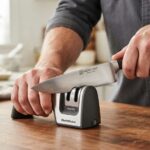
Selecting the right chef knife comes down to matching the blade’s dimensions and shape to your culinary technique. An 8-inch blade serves as the ideal benchmark for most home cooks, offering a harmonious balance between handling delicate herbs and slicing through heavy root vegetables. If you prioritize nimble control or work in a compact kitchen, a 6-inch knife provides excellent precision, whereas a 10-inch blade delivers the reach needed for large roasts and dense squash. Beyond length, the blade’s profile dictates your cutting rhythm: German-style knives feature a pronounced curved belly designed for smooth rocking motions, while Japanese-style blades opt for a flatter edge optimized for clean push-cuts and precise slicing. Neither design is inherently superior; rather, the finest choice is the one that complements your natural hand motion, and while high-grade steel holds its edge far longer, even elite cutlery demands periodic maintenance tools sharpen kitchen knives best? A simple guide to keep your investment performing at its peak.
Price: What Is Worth Paying For?
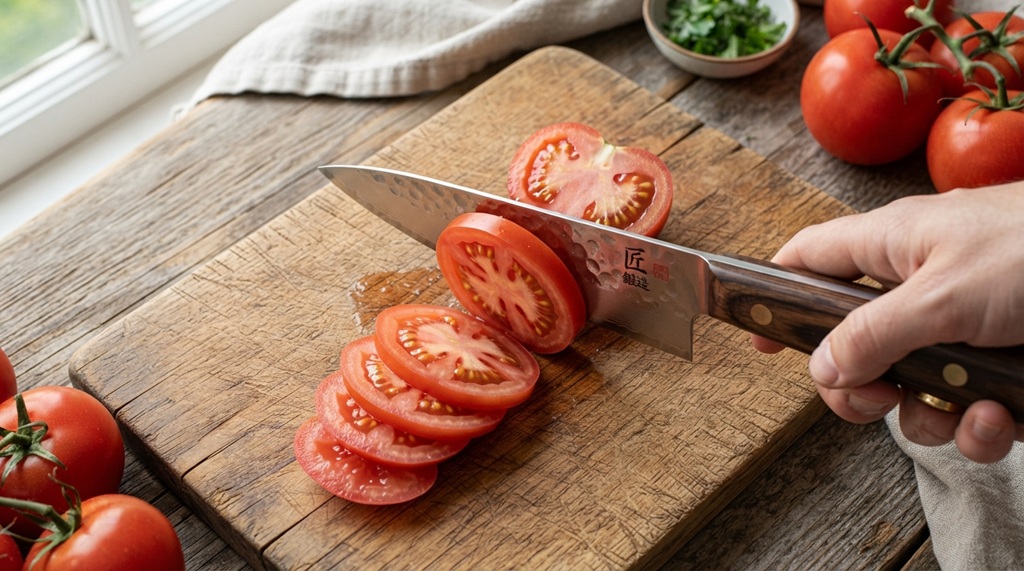
A worthwhile chef knife does not need to be expensive. You pay more for brand names, materials, and hand finishing. Not all of that improves performance.
Here is a simple way to think about it:
- Budget knives: Fine for beginners, but they may dull quickly.
- Mid-range knives: Often the best value, with good steel and comfortable design.
- Premium knives: Worth it if you cook often and want better edge retention and craftsmanship.
Before you buy, ask yourself how often you cook. If you cook daily, a mid-range or premium knife pays off. If you cook occasionally, a solid mid-range option is plenty.
How to Care for Your Chef Knife
Even the best knife needs care. Good habits keep the edge sharp and the blade safe.
First, wash the knife by hand and dry it right away. Dishwashers can damage the blade and the handle. Next, use a wooden or plastic cutting board. Glass and stone boards dull the edge fast.
Then, hone your knife regularly with a honing rod. Honing realigns the edge between sharpenings. Finally, sharpen it with a whetstone or a professional service a few times a year, depending on use.
Store your knife in a block, on a magnetic strip, or in a blade guard. This protects both the edge and your fingers.
Frequently Asked Questions
How much should I spend on a chef knife?
Most home cooks do well with a mid-range knife. It gives you good steel and comfort without a huge cost. Spend more only if you cook often and want extra edge retention.
Is a Japanese or German chef knife better?
Neither is better overall. German knives are usually heavier and sturdier. Japanese knives are often lighter and sharper, but their edges can be more delicate.
How often should I sharpen my chef knife?
It depends on how often you cook. Most home cooks sharpen a few times a year and hone before most uses. If the knife struggles to slice a tomato, it needs attention.
Can I put my chef knife in the dishwasher?
No, you should avoid it. Heat, water, and harsh detergent can dull the edge and damage the handle. Hand washing takes less than a minute and protects your investment.
Conclusion
A chef knife is worth buying when it offers quality steel, good balance, a comfortable handle, and the right size for you. Price is only one piece of the puzzle. Comfort and care matter just as much.
Before you buy, hold the knife if possible and test its feel. Then choose a mid-range option to start, and care for it well. With good habits, a solid chef knife will serve you for many years.