If your oven won’t heat, first check the power supply, then the igniter or heating element, and finally the temperature sensor. These three spots cause most oven heating problems. You can test each one in under 10 minutes, often without any tools.
A cold oven ruins dinner plans fast. But before you call a repair technician, try the simple checks below. Many oven issues have easy fixes you can handle yourself.
This guide walks you through every step. You’ll learn how to diagnose the problem and fix it today, whether you have a gas or electric oven.
Check the Power and Gas Connections First
Your oven might not be broken at all. Loose connections cause more “broken oven” calls than actual mechanical failures.
For electric ovens:
- Check your circuit breaker. A tripped breaker cuts power instantly, and you won’t see any lights or display.
- Look at the outlet if your oven plugs in separately. Unplug it, wait 60 seconds, then plug it back in.
- Test other outlets on the same circuit. If nothing works, you likely have a breaker issue, not an oven issue.
For gas ovens:
- Confirm the gas supply valve is fully open. Someone may have bumped it shut during cleaning.
- Check if other gas appliances work. If your stovetop lights but the oven doesn’t, the problem sits specifically in the oven’s ignition system.
- Smell for gas. If you smell gas but see no flame, turn off the oven and ventilate the room immediately. Call your gas company, not a repair tech, in this situation.
This step takes two minutes. Skip it, and you might pay a technician to flip a breaker you could have checked yourself.
Test the Igniter on Gas Ovens
A weak or dead igniter is the top cause of gas oven heating failures. The igniter’s job is to open the gas valve and light the burner.
Watch the igniter glow when you turn on the oven. It should glow bright orange for about 30-45 seconds before you see a flame. If it glows but never gets hot enough to ignite the gas, the igniter has weakened and needs replacement.
If the igniter doesn’t glow at all, it has likely failed completely. You’ll hear clicking sounds sometimes, but no flame follows.
Signs your igniter needs replacing:
- The oven takes longer than 90 seconds to ignite
- You hear gas hissing but see no flame
- The igniter glows dim instead of bright orange
- The oven lights inconsistently, working one day and not the next
Igniters cost between $15 and $50 for the part itself. Many homeowners replace them without professional help, since the process usually takes 20-30 minutes with basic tools.
Inspect the Heating Element on Electric Ovens
Electric ovens rely on heating elements to generate warmth, and a damaged element is the most common cause of no-heat problems. Most electric ovens have two elements: one on the bottom for baking and one on top for broiling.
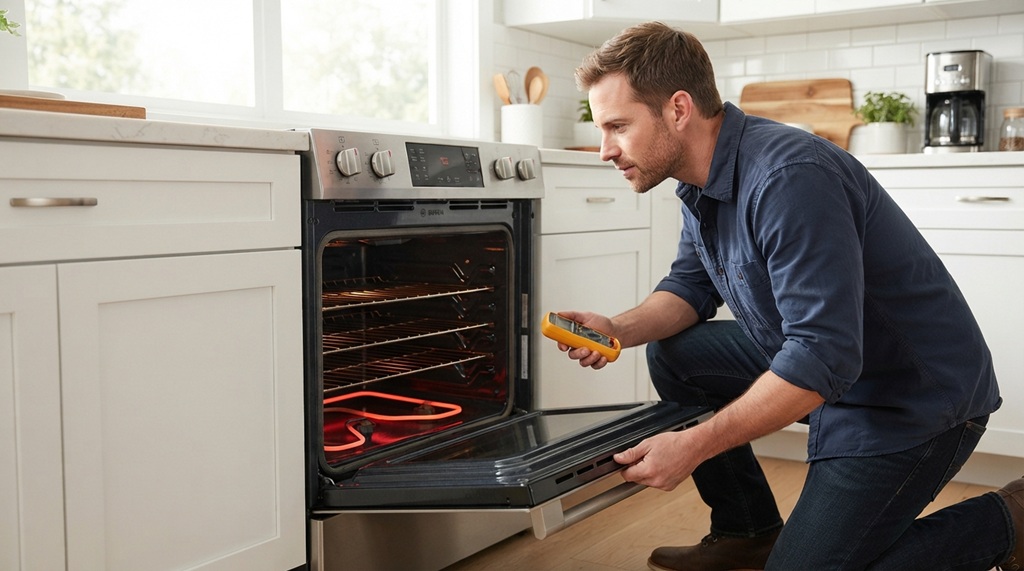
Look at the bottom element first. A working element glows red-orange within a few minutes of turning on the oven. If it stays dark or you see visible damage like blistering, cracks, or a break in the coil, the element needs replacement.
How to spot a bad element:
- Visible cracks, blisters, or holes in the coil
- The element doesn’t glow at all when the oven is on
- You see sparks near the element (turn off the oven immediately if this happens)
- One section glows while another stays dark
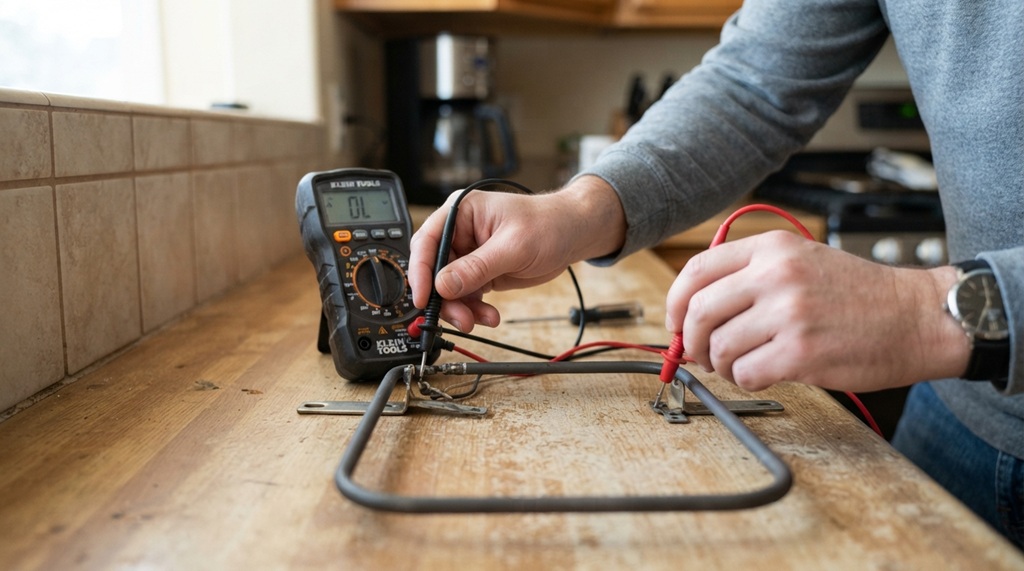
Replacing a heating element is straightforward. You’ll need to disconnect the oven’s power, remove a few screws, and swap the old element for a new one. Parts typically run $30 to $80, and the job takes most people 30-45 minutes.
Check the Temperature Sensor and Thermostat
Sometimes your oven heats up but the temperature reads wrong, which creates its own set of cooking problems. A faulty temperature sensor tells your oven’s computer the wrong information, causing it to overheat, underheat, or shut off too early.
The sensor usually sits at the back of the oven cavity, near the top. It looks like a small metal probe, separate from the heating element.
Test it yourself:
- Look at the sensor. It shouldn’t touch the oven walls or the heating element.
- Check for visible damage like cracks or discoloration.
- Use an oven thermometer to compare the actual temperature against what your oven display shows. A gap larger than 25-30 degrees suggests a sensor problem.
If the sensor reading matches your thermometer closely, the sensor works fine, and you should look elsewhere for the heating issue. If the readings differ significantly, the sensor likely needs replacement, which costs $20 to $40 for the part.
How to Perform a Control Board Reset
Modern ovens rely on sophisticated electronic control boards to govern heating cycles, and much like a personal computer, these systems can occasionally experience temporary digital glitches that halt operation. Before assuming a component has failed, perform a hard power reset by disconnecting the oven from its wall outlet or switching off its dedicated circuit breaker if hardwired for at least five full minutes. This complete power interruption clears residual energy and resets frozen control logic. Once power is restored, test the oven; if the heating issue persists, check the digital display for error codes, which correspond to specific diagnostic listings in your owner’s manual or on the manufacturer’s website. Resolving these minor electrical stalls keeps your entire kitchen running reliably much like incorporating the best steps to descale a coffee maker weekly keeps your morning routine seamless and uninterrupted.
Clean the Igniter and Burner Ports
Dirty burner ports block gas flow and prevent proper ignition, even when the igniter itself works fine. Food debris, grease, and spills accumulate in these small openings over time.
Turn off and unplug the oven before cleaning anything. Locate the burner assembly at the bottom of the oven cavity. Use a soft brush or toothpick to clear any visible debris from the small holes along the burner.
This maintenance step often gets overlooked because the igniter still glows normally. The blockage happens downstream, at the point where gas should flow out and meet the spark. Cleaning takes about 10 minutes and costs nothing, making it worth trying before you buy replacement parts.
Know When to Call a Professional
Some oven repairs go beyond a DIY fix, and knowing when to stop matters as much as knowing how to troubleshoot. Call a professional if you’re not comfortable working with gas lines or high-voltage electrical components.
Call a technician if:
- You smell gas at any point during troubleshooting
- The oven trips your breaker repeatedly after reset
- You’ve replaced the igniter or element and the problem continues
- The control board shows a persistent error code you can’t resolve
- Your oven is under warranty (DIY repairs can void coverage)
A service call typically costs $100 to $200 for diagnosis, with parts and labor added on top depending on the repair. If your oven is older than 12-15 years, ask the technician whether repair costs make sense compared to replacement.
Frequently Asked Questions
Why is my oven not heating but the stovetop works fine?
The stovetop and oven often run on separate ignition or heating systems, even in the same unit. This means the oven’s igniter, heating element, or control board can fail independently while the stovetop keeps working normally. Check the oven-specific components covered above rather than assuming a whole-unit failure.
Can a dirty oven cause heating problems?
Yes, heavy grease buildup or food debris can block burner ports on gas ovens or interfere with sensor readings on electric models. Regular cleaning, especially around the burner assembly and temperature sensor, prevents many heating issues before they start. If you haven’t deep-cleaned your oven in over six months, this could be your problem.
How long does an oven igniter usually last?
Most igniters last between 5 and 10 years with normal use, though heavy daily cooking can shorten that lifespan. If your oven is within that age range and shows slow ignition or dim glowing, replacement is a reasonable next step. Igniters are one of the most commonly replaced oven parts.
Is it safe to use my oven if I smell gas but it won’t heat?
No, you should never attempt to troubleshoot or use the oven if you smell gas. Turn off the oven, ventilate the room by opening windows, and leave the gas supply valve closed. Contact your gas utility company right away, since this situation requires professional handling.
Why does my electric oven heat up but not reach the set temperature?
This usually points to a faulty temperature sensor giving your oven’s control board wrong information. Use an oven thermometer to check the actual temperature against your display setting, and replace the sensor if there’s a significant gap. A worn heating element can also cause this if it can’t generate enough heat to reach higher settings.
Final Thoughts
A cold oven feels frustrating, but most causes have simple, fixable solutions. Start with the power and gas connections, then move to the igniter, heating element, or temperature sensor based on your oven type. A quick reset often solves control board glitches without any parts needed.
Work through these steps in order, and you’ll likely identify the problem within 30 minutes. If the issue persists after trying these fixes, a professional technician can diagnose deeper electrical or mechanical failures safely.