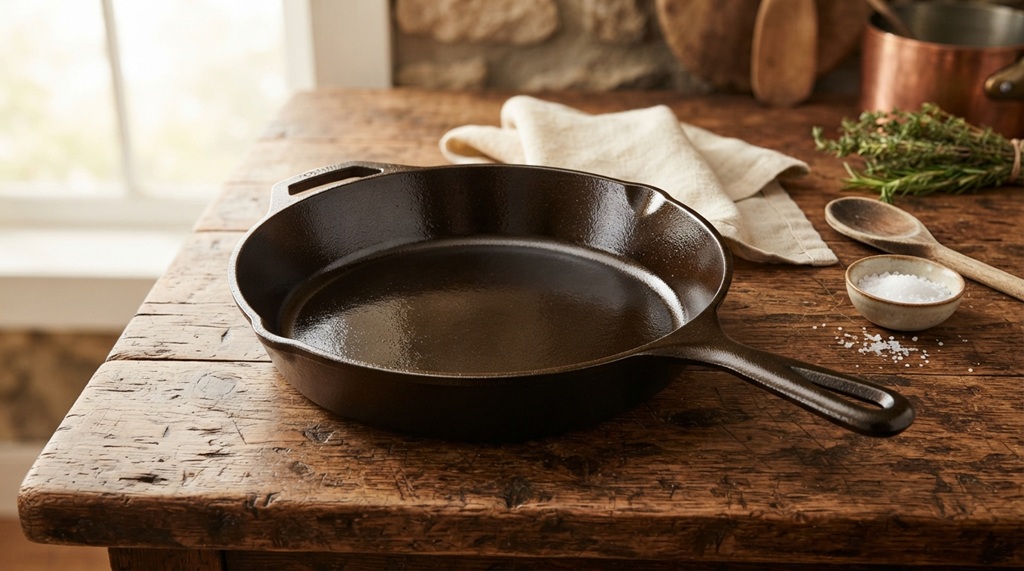
Caring for a cast iron skillet is easier than most people think. You just need three habits: clean it right after use, dry it completely, and season it regularly. Skip the soap panic and the complicated rituals you’ve read about elsewhere.
Cast iron rewards simple, consistent care. Once you build the habit, it takes less than five minutes after each meal. This guide breaks the process into clear steps anyone can follow, whether you inherited grandma’s skillet or just bought your first one.
By the end, you’ll know exactly how to clean it, season it, store it, and fix it if things go wrong.
Why Cast Iron Needs Different Care Than Other Pans
Cast iron is porous metal, not a coated nonstick surface. That’s why it reacts to water, soap, and air differently than your other cookware.
The seasoning layer on cast iron is baked-on oil, not a factory coating. This layer gives cast iron its natural nonstick surface. Water left sitting on bare iron causes rust within hours. Harsh scrubbing strips that seasoning layer away. Understanding this changes how you treat the pan. It’s not fragile, but it does need dry, quick attention after every use.
How to Clean a Cast Iron Skillet the Right Way
Clean your skillet while it’s still warm, using hot water and a stiff brush. Skip the dish soap in most cases it’s not required and won’t ruin your seasoning if used sparingly, but water alone usually does the job.
Step-by-Step Cleaning Process
- Rinse the pan under hot water right after cooking.
- Scrub with a stiff brush or nonmetal scraper to remove food bits.
- For stuck-on food, add coarse salt and scrub in circles.
- Rinse again and check that the surface feels smooth.
- Dry immediately with a towel don’t let it air dry.
What to Avoid When Cleaning
Never soak a cast iron skillet in water. Soaking loosens the seasoning and invites rust to form fast. Avoid steel wool and abrasive scrubbers unless you’re stripping the pan for reseasoning. Also skip the dishwasher completely; the prolonged moisture and detergent will strip your seasoning every time.
How to Dry and Season Your Skillet After Cleaning
Drying comes before seasoning, and both happen every single time you clean the pan. Skipping either step is the number one reason skillets rust.
Towel-dry the skillet first, then place it on low heat for two to three minutes. This burns off any remaining moisture hiding in the pores of the metal. Once it’s fully dry, add a few drops of oil flaxseed, vegetable, or canola all work well. Rub the oil into the entire surface, including the handle and the outside, using a paper towel.
Wipe off the excess oil until the pan looks almost dry, not greasy. A thin layer bakes on cleanly; a thick layer turns sticky and uneven. Let the skillet cool completely before you store it.
How Often You Should Fully Re-Season Your Skillet
Most home cooks only need a full re-seasoning once or twice a year. Light maintenance seasoning, on the other hand, happens after nearly every clean.
You’ll know it’s time for a full re-season when food starts sticking more than usual, or when you spot dull, patchy, or flaking areas on the surface. To do this, strip the pan back to bare metal using steel wool, then rebuild several thin layers of oil in the oven at 450–500°F, one hour per layer, upside down with foil underneath. This process rebuilds a strong, even seasoning base from scratch.
Don’t feel pressured to re-season constantly. Industry experts generally agree that over-seasoning is just as common a mistake as under-seasoning, since too many oil layers can turn sticky or flake off in sheets.
How to Store a Cast Iron Skillet Without It Rusting

Store your skillet in a dry place with a thin layer of oil still on it. Moisture is the real enemy here, not air exposure.
Avoid stacking other pans directly inside a cast iron skillet, since trapped moisture between the metal surfaces causes rust spots. If you must stack cookware, place a paper towel or cloth between each piece to absorb any moisture. Keep the skillet away from damp areas like under-sink cabinets or near a dishwasher vent, and check it every few weeks if it isn’t used often, just to catch early rust before it spreads.
How to Fix Common Cast Iron Problems
Even severe cast iron issues rarely mean a dead pan; with the right technique, almost any surface damage can be restored to a slick, non-stick finish. Rust, sticky buildup, and flaking seasoning are simply temporary setbacks rather than permanent flaws, usually solved with a brief scrub, a thorough drying, and a fresh layer of oil baked into the iron. Restoring your pan not only preserves a timeless kitchen tool, but it also sharpens your overall cooking intuition and tool maintenance skills. If you want to refine your broader collection beyond iron, explore our practical guide on selecting essential kitchen tools to streamline your culinary setup and make everyday meal prep effortless.
Rust Spots
Scrub the rusty area with steel wool until the metal looks silver again. Rinse, dry thoroughly on the stove, then reseason that spot with a thin coat of oil baked on at 450°F for an hour. Small rust patches, when caught early, take about fifteen minutes to fix.
Sticky or Tacky Surface
A tacky surface usually means too much oil got baked on during seasoning. Fixing it involves an easy reset: bake the pan upside down at 500°F for an hour to burn off the excess, then wipe and re-season with a much thinner layer next time.
Food Sticking to the Pan
Sticking often means the seasoning has thinned, or the pan wasn’t preheated properly before cooking. Preheat cast iron for a full two to three minutes before adding oil or food. If sticking continues across multiple meals, it’s a sign that a light re-seasoning would help.
A Tip Most Guides Skip: Match Your Oil to Your Cooking Habits
Most articles tell you to season with “any cooking oil,” but the type you choose actually matters based on how you use the pan. Flaxseed oil creates a harder, more durable layer, but it can flake off if it’s applied too thick better for skillets used occasionally. Vegetable or canola oil forms a slightly softer seasoning that self-repairs more easily with regular cooking, making it a better fit for skillets used daily. If you cook with cast iron almost every day, canola oil will likely serve you better long-term than the flaxseed method many guides recommend by default.
Frequently Asked Questions
Can I use soap on a cast iron skillet?
Yes, a small amount of mild dish soap is fine and won’t strip a well-seasoned pan. Modern soaps are much gentler than older formulas, so occasional use is safe. Just avoid soaking the pan or scrubbing aggressively with soap and steel wool together.
Why does my cast iron skillet smell or taste like metal?
This usually means the seasoning layer is thin or uneven in spots. A light reseasoning typically solves the smell and taste within one or two uses. Cooking acidic foods like tomato sauce too often on thin seasoning can also cause this issue.
Is it safe to cook eggs in a cast iron skillet?
Yes, once the pan has a solid, well-built seasoning layer. Eggs stick most on newer or poorly seasoned pans, so build up a few layers first. Adding a bit of butter or oil before cooking also helps prevent sticking.
How do I know if my skillet is properly seasoned?
A properly seasoned skillet looks matte black or dark brown, not gray or splotchy. Food should release fairly easily, and water should bead up rather than soak into the surface. If yours doesn’t meet these signs yet, a few rounds of cooking with oil will build it up naturally.
Can I put a cast iron skillet in the dishwasher?
No, dishwashers strip the seasoning almost every time due to prolonged water exposure and harsh detergent. Hand-washing with hot water takes just a minute or two anyway. Stick to the sink for cast iron, even if everything else goes in the dishwasher.
Final Thoughts
Cast iron care really comes down to three habits: clean it promptly, dry it fully, and keep a thin layer of oil on it. Once these steps become routine, your skillet will last for decades, and it may even outlast every other pan in your kitchen. Skip the soaking, skip the dishwasher, and don’t overthink the seasoning process simple, consistent care is what actually works.