A noisy garbage disposal usually means something is stuck, loose, or worn out. You can fix most of these problems yourself in under 30 minutes. This guide walks you through safe, step-by-step repairs so you don’t have to call a plumber right away.
Garbage disposals make different noises for different reasons. A rattling sound often means a foreign object is inside. A humming noise usually points to a jammed motor. A grinding or screeching sound can mean worn-out parts.
Before you touch anything, always cut the power first. This one step keeps your hands safe. We’ll cover exactly how to do that below.
Why Is Your Garbage Disposal Making Noise?
Your disposal makes noise because something inside is loose, jammed, or damaged. Knowing the type of noise helps you find the cause faster.
Common Noise Types and What They Mean
- Rattling or clanking: A hard object, like a spoon or bottle cap, has fallen in.
- Humming with no grinding: The motor is running, but the blades are jammed.
- High-pitched squealing: The bearings or motor bushings are wearing out.
- Loud grinding: Food debris has hardened, or a blade has come loose.
- Buzzing then silence: The unit has likely tripped its internal reset switch.
Each of these noises points to a different fix. Once you identify the sound, you can move straight to the right solution below.
Safety First: Steps to Take Before Any Repair
Always disconnect the power before you inspect or repair your disposal. This step prevents serious injury.
- Turn off the switch that controls the disposal.
- Unplug the unit if it plugs into an outlet under the sink.
- Flip the breaker for extra safety, especially if the disposal is hardwired.
- Never put your hand inside the disposal, even when it’s off. Use tongs, pliers, or a flashlight and a wooden spoon instead.
This last point gets skipped often, and it shouldn’t. Many injuries happen when people assume the unit is fully off. A breaker flip only takes a few seconds and removes all doubt.
Fixing Rattling and Clanking Noises in Your Disposal
A sharp rattling or metallic clanking sound almost always indicates that a hard foreign object such as a stray utensil, bone, or coin is trapped inside the grinding chamber, requiring immediate power shutoff and manual removal to prevent impeller damage. Safely clearing these obstructions is a vital part of routinely maintaining your kitchen plumbing, much like knowing why clean dishwasher filter for best results ensures both appliances drain efficiently and operate without unnecessary strain.
- Turn off the power completely, as described above.
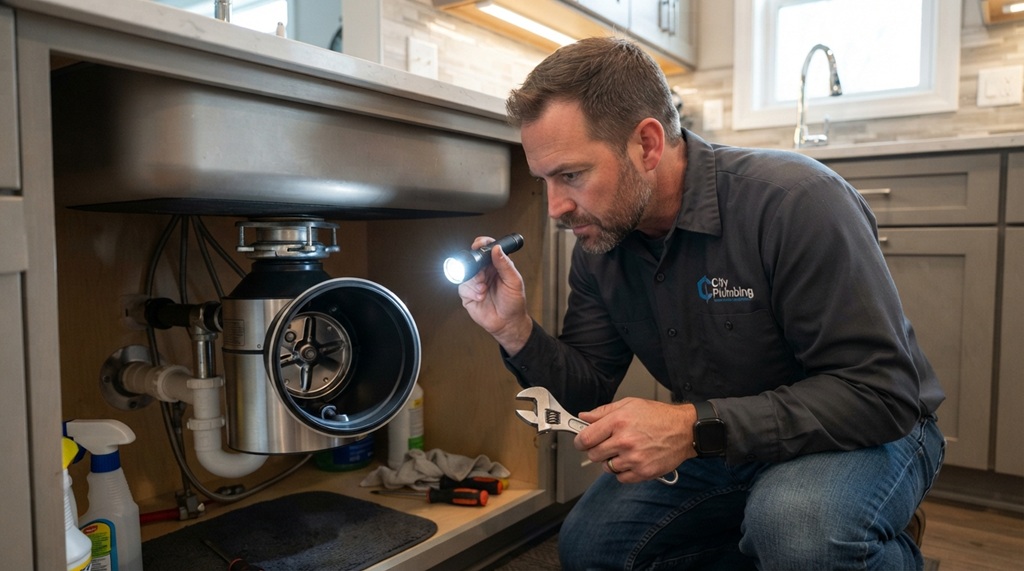
- Shine a flashlight into the disposal to look for the object.
- Use tongs or needle-nose pliers to grab it. Never use your fingers.
- Once removed, manually rotate the grinding plate with a disposal wrench or an Allen key to check for smooth movement.
- Restore power and run water while testing the unit briefly.
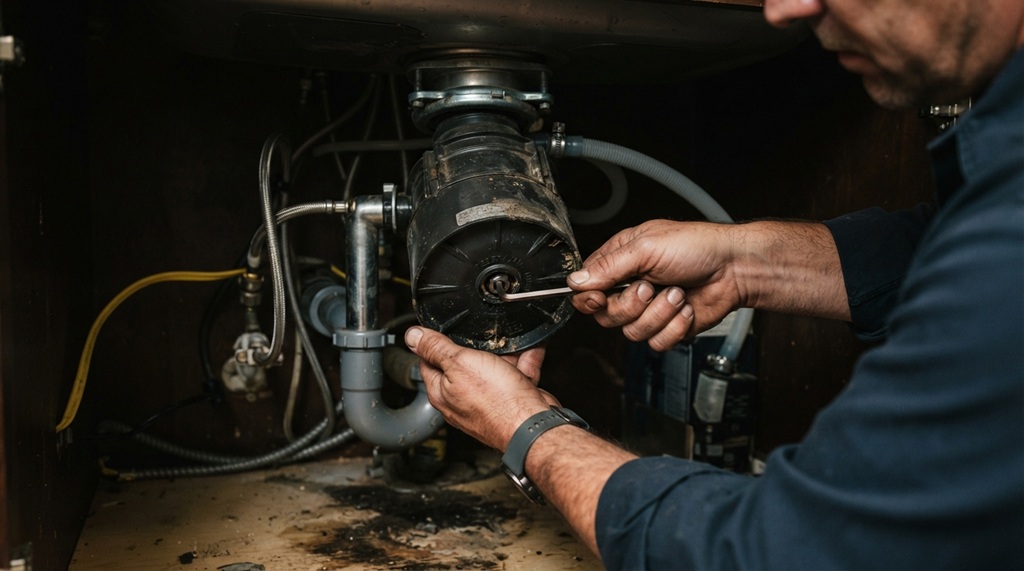
If you don’t have a disposal wrench, most units come with a small hex key. It fits into a hole on the bottom of the unit. This lets you turn the motor by hand and loosen any jam.
How to Fix a Humming Noise (Jammed Motor)
A humming sound with no grinding means the motor is trying to run, but something is blocking the blades. This is different from a rattling noise because nothing is loose.
Step-by-Step Fix
- Turn off the power at the switch and the breaker.
- Locate the reset button on the bottom of the unit. It’s usually red.
- Use the hex key to rotate the motor shaft from underneath. This helps free the jam manually.
- Once it turns freely, press the reset button.
- Restore power and test the disposal with water running.
If the motor still hums after this, the jam may involve a harder object, like glass or metal. In that case, repeat the flashlight-and-tongs method from the rattling noise section.
How to Fix Grinding or Screeching Noises
Grinding usually comes from hardened food debris or a loose impeller (the spinning arm inside). Screeching often means worn bearings, which is harder to fix at home.
For grinding noises:
- Turn off the power.
- Run ice cubes and coarse salt through the disposal. This helps scrape off hardened buildup from the grinding chamber walls.
- Follow with cold water for a minute to flush out loosened debris.
For screeching noises: Screeching from worn bearings usually means the motor is aging. According to industry experts, this type of wear is common in disposals older than eight to ten years. A repair may only offer a short-term fix. Replacement is often the more practical choice at this stage.
One Overlooked Fix Most Guides Skip: Check the Mounting Assembly
Most articles focus only on the inside of the disposal. But loose mounting bolts are a surprisingly common noise source, and they’re easy to miss.
If your disposal rattles specifically when you run the dishwasher or when water flows through the sink, the unit itself might be vibrating against loose mounting screws. This creates noise even when nothing is wrong internally.
To check this:
- Turn off the power.
- Look under the sink at the mounting ring that holds the disposal in place.
- Gently try to wiggle the unit by hand.
- If it moves more than a small amount, tighten the three mounting screws evenly with a screwdriver.
This step takes two minutes and solves noise problems that internal repairs won’t fix. Many homeowners replace a perfectly good disposal because they never check this simple detail.
When to Call a Professional Instead
Call a plumber if the noise continues after you try these fixes, or if you notice leaks, burning smells, or the unit won’t reset at all. These signs often mean deeper motor or electrical damage.
You should also call a professional if:
- The disposal sparks or trips your circuit breaker repeatedly.
- You smell burning rubber or plastic.
- Water leaks from the bottom of the unit.
- The noise started after a power surge or storm.
Trying to repair electrical or motor damage yourself can be dangerous. A licensed plumber can safely diagnose whether the unit needs a repair or a full replacement.
Frequently Asked Questions
Is it safe to fix a noisy garbage disposal myself?
Yes, most noisy disposal problems are safe to fix yourself if you cut the power first. Jams, stuck objects, and loose mounting bolts are all simple DIY fixes. Leave electrical issues or motor replacement to a licensed professional.
Why does my garbage disposal hum but not grind?
A humming sound with no grinding usually means the blades are jammed but the motor still receives power. Use the hex key hole on the bottom of the unit to manually free the jam, then press the reset button.
Can ice cubes really fix a noisy disposal?
Yes, ice cubes and coarse salt help scrape hardened food debris off the interior walls of the disposal. This often reduces grinding noise caused by buildup. Run cold water afterward to flush out the loosened particles.
How long should a garbage disposal repair take?
Most simple repairs, like clearing a jam or removing a stuck object, take 10 to 30 minutes. Mounting bolt adjustments take even less time. If a repair takes longer than an hour, the issue may need professional attention.
Should I replace or repair a screeching garbage disposal?
If your disposal is under five years old, a repair is usually worth trying first. If it’s older than eight years and screeching, replacement is often more cost-effective than repeated repairs, according to industry experts.
Conclusion
A noisy garbage disposal doesn’t always mean it’s broken beyond repair. Most rattling, humming, or grinding noises come from simple, fixable causes like stuck objects, jams, or loose mounting bolts. Always cut the power before you inspect or repair the unit. If the noise continues after trying these steps, or if you notice leaks or burning smells, call a licensed plumber. With the right approach, you can safely solve most disposal noise problems without replacing the whole unit.