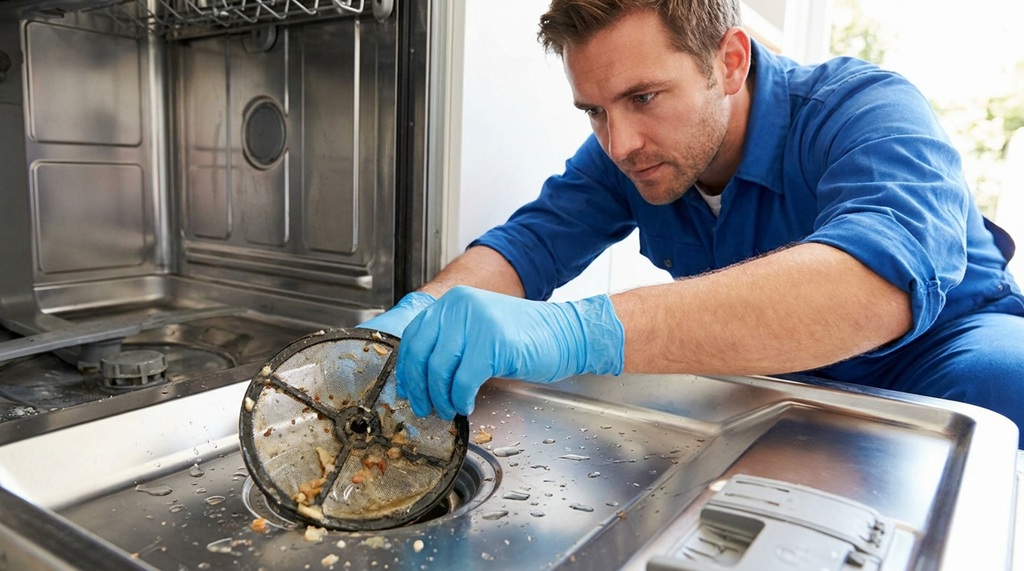
A dirty dishwasher filter blocks water flow and traps food particles. This forces your machine to recirculate dirty water over your dishes instead of clean water. The result? Cloudy glasses, greasy plates, and a bad smell coming from inside the machine.
Most dishwashers use a self-cleaning filter or a manual filter. Manual filters need regular cleaning because they don’t break down food waste on their own. If you skip this step, grime builds up fast and your dishwasher stops working the way it should.
This guide explains exactly why filter cleaning matters, how often to do it, and what happens if you ignore it.
What Does a Dishwasher Filter Actually Do?
The filter catches food scraps, grease, and small debris during each wash cycle. It sits at the bottom of the tub, usually under the lower rack. Without it, leftover food would clog the spray arms and drain line.
Think of it like a strainer in your sink. It stops solid particles from moving further into the system. Over time, though, that trapped debris needs to be removed manually. If it isn’t, the filter reaches its limit and stops doing its job properly.
Manual vs. Self-Cleaning Filters
Not all filters work the same way. Knowing which type you have changes how often you need to clean it.
- Manual filters require you to remove and rinse them by hand. Most modern dishwashers use this design because it improves cleaning performance.
- Self-cleaning filters use a built-in grinder to break down food particles. These are common in older models and need less frequent attention.
Check your owner’s manual to confirm which type your dishwasher has. This one detail changes your entire cleaning routine.
How a Dirty Filter Affects Dishwasher Performance
A clogged filter directly lowers cleaning quality. Dirty water gets pushed back onto your dishes during each cycle instead of draining away properly.
Here’s what you might notice:
- Food residue left on “clean” dishes
- Cloudy or spotty glassware
- A musty or sour smell inside the machine
- Longer wash cycles as the machine works harder
- Water pooling at the bottom of the tub after a cycle
According to industry experts, a blocked filter is one of the most common—and most overlooked—reasons dishwashers stop cleaning effectively. People often blame the detergent or the machine itself, when the filter is the real problem.
How Often Should You Clean Your Dishwasher Filter?
Most manufacturers recommend cleaning the filter every two to four weeks under normal use. If you run your dishwasher daily or wash pots with heavy food residue, clean it weekly instead.
Households that skip pre-rinsing dishes should check the filter more often. Bits of rice, seeds, and eggshells clog filters faster than most other food waste. A quick monthly check helps you catch buildup before it becomes a bigger issue.
If you’re not sure how often you personally need to clean it, do a visual check every two weeks for the first month. This tells you how fast debris builds up in your specific household.
Step-by-Step: How to Clean Your Dishwasher Filter
Cleaning a dishwasher filter takes less than ten minutes. Here’s the simple process most manual filters require:
- Remove the lower rack to access the bottom of the tub.
- Locate the filter, usually a round or cylindrical piece near the spray arm.
- Twist and lift the filter out, following your model’s release mechanism.
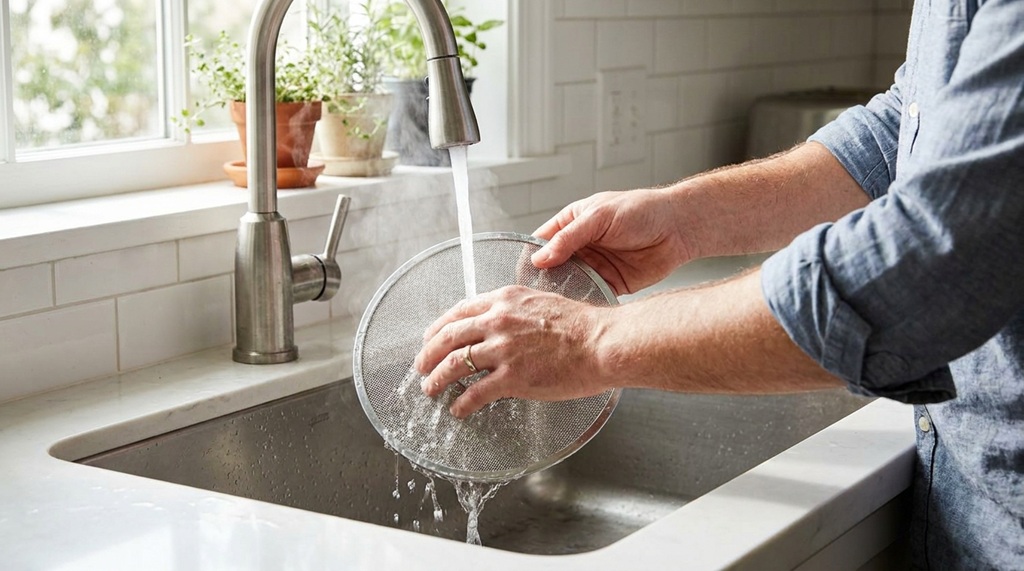
- Rinse under warm water to remove loose debris.
- Scrub gently with an old toothbrush or soft brush to clear stuck-on grime.
- Check for cracks or damage before placing it back.
- Reinsert and lock the filter into place securely.
Skipping step six is a common mistake. A cracked filter won’t catch debris properly, even after cleaning, so it’s worth a quick inspection every time.
What Happens When You Neglect Your Dishwasher Filter?
Allowing debris to accumulate in your dishwasher filter does far more than leave residue on your glassware it forces the circulation pump to work overtime, restricts water flow, and eventually leads to costly mechanical failure. Over time, trapped food particles decompose in stagnant water, creating foul odors and harboring bacteria that undermine every wash cycle. Proper appliance care requires consistent attention to these hidden components; just as routine upkeep preserves your dish-cleaning performance, understanding the critical mechanics behind home cooling systems like the world of refrigerator compressor parts ensures your entire kitchen operates at peak efficiency.
Reduced Cleaning Power
Dishes come out dirty even after a full cycle. Grease and food particles stay trapped in the water and settle back onto glasses and plates.
Bad Odors
Trapped food waste starts to rot inside the machine. This creates a smell that can transfer onto your dishes and fill your kitchen every time you open the dishwasher.
Mechanical Strain and Repairs
A blocked filter forces the pump to work harder than it should. Over time, this extra strain can damage the pump or motor, leading to repair costs that could have been avoided with regular cleaning.
A Simple Habit That Extends Your Dishwasher’s Life
Most people focus on detergent brand or water temperature when troubleshooting a dishwasher. Filter maintenance rarely comes up, even though it directly affects results.
Try pairing filter cleaning with a task you already do regularly, like changing your kitchen towels or taking out the trash. This turns a maintenance chore into a habit instead of something you forget for months. A five-minute task done consistently protects your machine far more than an expensive deep-clean done once a year.
Frequently Asked Questions
How do I know if my dishwasher filter needs cleaning?
Look for cloudy glasses, food residue on dishes, or a bad smell coming from the machine. If you notice any of these signs, remove the filter and check it for visible buildup. A quick rinse usually solves the problem immediately.
Can I run my dishwasher without a filter?
No, running a dishwasher without its filter can damage the pump and drain system. Food particles will circulate freely and clog other parts of the machine. Always keep the filter in place, even between cleanings.
Why does my dishwasher smell bad even after cleaning?
A lingering smell often means the filter still has trapped grease or food debris. Try soaking it in warm, soapy water for 15 minutes before scrubbing again. If the smell continues, check the drain hose and spray arms for additional buildup.
Does every dishwasher have a removable filter?
Most modern dishwashers have a removable manual filter, but some older models use a self-cleaning system instead. Check your owner’s manual or look near the bottom of the tub, under the lower rack, to confirm which type you have.
Will a dirty filter cause my dishwasher to leak?
Yes, a severely clogged filter can cause water to back up and overflow during a cycle. This puts pressure on seals and gaskets that aren’t designed for standing water. Regular cleaning helps prevent this kind of unexpected leak.
Final Thoughts
A clean dishwasher filter is one of the simplest ways to keep your machine running at its best. It affects everything from cleaning power to odor control to long-term mechanical health. Set a recurring reminder every two to four weeks, and your dishwasher will reward you with spotless dishes and a longer lifespan.